what would happen to a human on mars
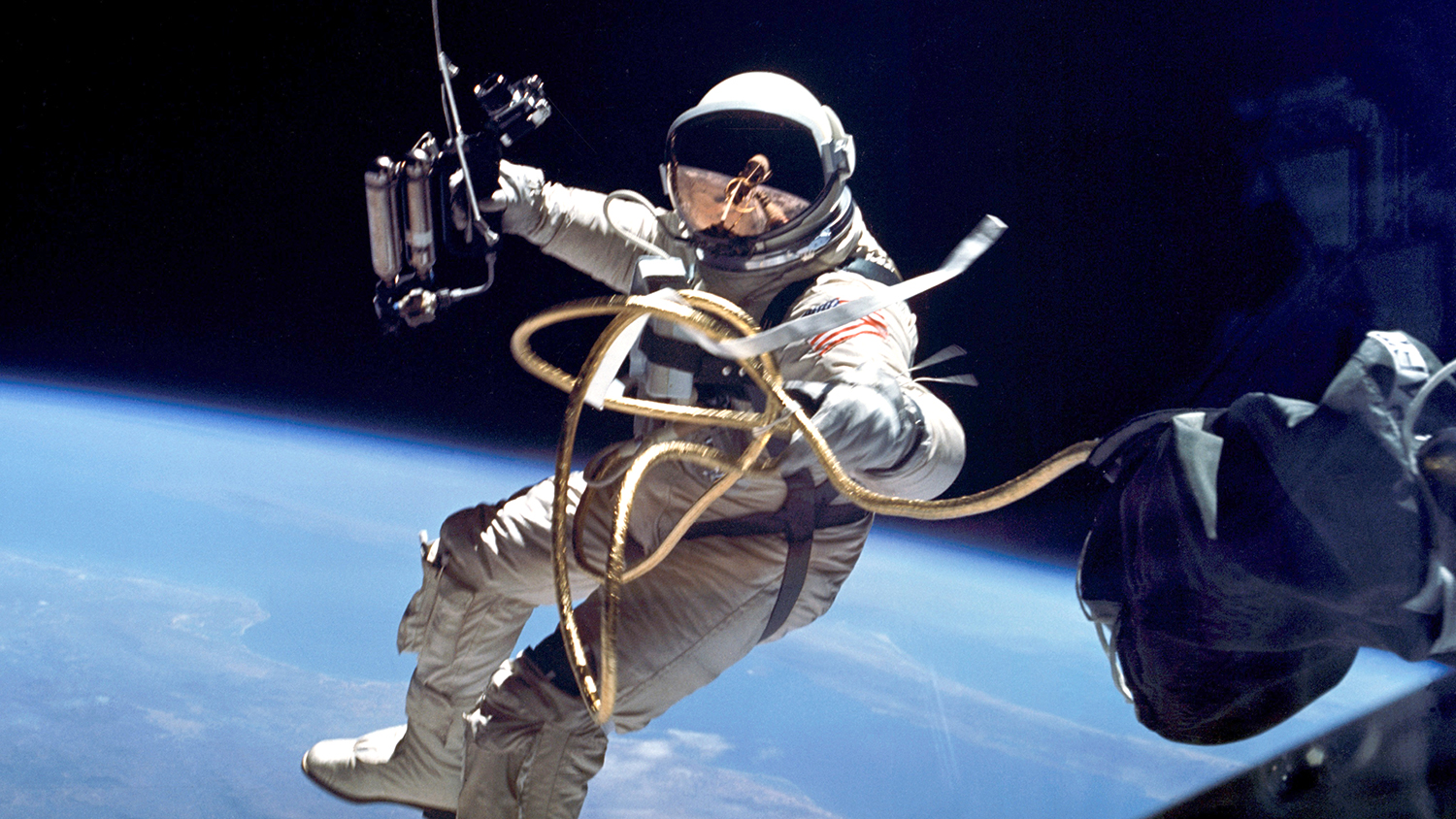
As humans prepare to venture deeper into outer space, including potential trips to Mars, researchers are hard at work trying to understand and mitigate the effects of low gravity and radiation on space travelers' bodies.
"People think of technology every bit the limiting factor in space flight, but it'southward not," said Thomas Lang, PhD, a professor of radiology and biomedical imaging at UC San Francisco. "Human physiology is the limiting factor."
Spaceflight seems to have a particularly notable upshot on the musculoskeletal, cardiovascular and allowed systems. Many of the changes researchers are seeing as a event of spaceflight are similar to those seen in aging, though they happen much faster in space.
"We're attuned to living in gravity," Lang said.
Every bit individual aerospace companies and NASA are competing to be the commencement to land on Mars, UCSF researchers, and many others nationwide, are studying the furnishings of space travel – and trying to notice means to showtime those impacts.
Os Loss, Back Hurting and Dried Plums
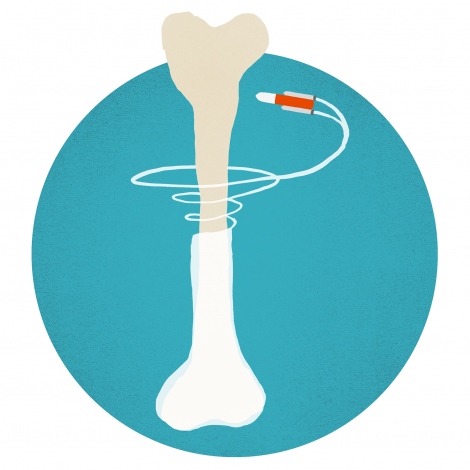 Since the showtime Apollo infinite flights in the 1960s and '70s, the effects of space on muscles and bones has been credible. After just eight days in orbit, the Apollo astronauts were so weak that they had to be pulled from their landing capsules.
In the following decades, astronauts, such equally those on the International Space Station (ISS), began to exercise to continue their bones and muscles conditioned during their six-month stays. Still, many astronauts endure back pain for years later returning to Earth.
To figure out why the back pain occurs after the exposure to depression gravity, Jeffrey Lotz, PhD, the David Bradford Endowed Chair of Orthopedic Surgery at UCSF, recently studied the spines of astronauts later their time in infinite.
What he institute surprised him.
He'd imagined that the dorsum hurting arose from disks bloated with water that would normally get squeezed out by keeping an upright posture in gravity. Instead, he discovered the source of the dorsum pain was deconditioning of the multifidus muscles, small muscles that connect and support the vertebrae.
Lotz is working with NASA to devise a program of multifidus exercises that astronauts can practise within the constraints of a spaceship in zero gravity.
Practise is key not only for muscle force, only for os wellness likewise, and Lang has been studying the result of space travel on basic for decades. "Bones aren't merely a hard framework," he said. "They grow and repair themselves in response to supporting loads against gravity."
A lack of gravity interrupts the natural cycle of bone role, which goes something similar this: Bone cells called osteocytes detect regions of decreased strain or damage to bone tissue, triggering other cells, called osteoclasts, to resorb bone that no longer is needed to meet the strain or has been damaged by repetitive strain. The piece of work of osteoclasts triggers yet another cell, the osteoblast, to movement in and rebuild the bone where it is needed.
In the absence of gravity the rebuilding doesn't seem to happen as a result of the reduced strain on os. This may put astronauts in danger of os loss and fractures during their missions. Daniel Bikle, Doctor, PhD, professor of medicine and dermatology, using mouse studies, determined that microgravity affects advice between bone cells necessary for the bone growth and repair process.
"It's a bidirectional signaling pathway," says Bikle. "The bone cells regulate each other's role." Lack of gravity produces an intermission in that signaling, and the osteoclasts continue to resorb bone, but the osteoblasts don't replenish it. Bikle believes this same pathway might be involved in osteoporosis. If so, unraveling the details should provide insight that benefits a population far larger than space travelers.
Lang assessed bone density of astronauts returning from the ISS and plant that after six months, they had lost betwixt 6 percentage and 9 percent of the total bone density from their hips – losing about as much in a calendar month every bit a postmenopausal woman loses in a year. In a study focused on bone loss in the hip, Lang and colleagues found that 1 year later flight, the total bone mass was almost fully recovered only recovered bone was redistributed, resulting in a bone compages resembling that of an older person.
Radiation exposure, in addition to microgravity, during spaceflight causes bone loss for astronauts, though one study points to a surprising prescription for this.
Bernard Halloran, PhD, a professor in the Department of Medicine, found that mice subjected to radiation and fed a nutrition containing plum pulverisation lost significantly less bone.
His next steps are to discern what compounds in the prunes are responsible for the effect. "This approach shows a lot of promise, merely it's not as uncomplicated every bit sending people into space with a truckload of prunes," he said. "We need to isolate the chemical compound and put it in a pill."
Center of the Matter: The Cardiovascular System
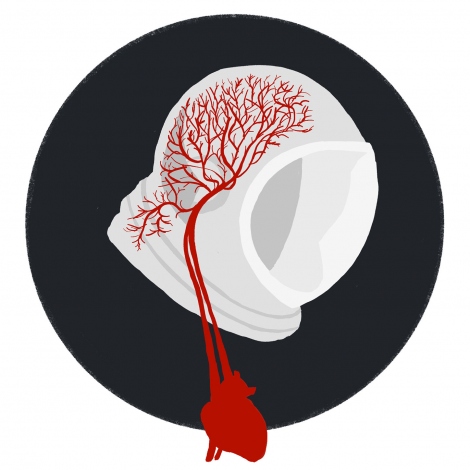 The radiation and depression gravity of space likewise has an impact on the body's vascular arrangement, causing circulatory bug for astronauts when they render to Globe and an increased risk of eye attack later in life.
Marlene Grenon, Doc, associate professor of vascular surgery, has had a longtime interest in the effects of space flight on the vascular system. "Astronauts are in skilful shape, and exercise protocols are part of their lives," said Grenon. "And then we want to know what's going on hither. Is it radiation? Gravity? Other physiological factors?"
Grenon, who has a diploma in Space Sciences from the International Infinite University and has developed UCSF's first course on the consequence of spaceflight on the body, has studied the effects of simulated microgravity on the function of vascular endothelial cells which line the inside of blood vessels.
Grenon cultured these cells and placed them in an surroundings that fake very depression gravity. She found that the lack of gravity causes a decrease in the expression of certain genes in the cells that affect adhesion of plaque to the vessel wall. While the implications of these changes aren't yet clear, it'due south evident that a lack of gravity affects cell function.
In improver, previous work by Grenon showed that microgravity creates changes in the cells that carry electricity in the heart, which may put astronauts at hazard of cardiac arrhythmias.
Grenon's colleagues Sonja Schrepfer, MD, PhD, and Tobias Deuse, MD, also professors of surgery, are helping put pieces of that puzzle together by determining what changes to the function of vascular cells are evident after space flight.
Schrepfer in 2016 studied the vascular systems of mice that had spent time on the ISS, as well as vascular cells cultured in a microgravity environment on Earth. Her squad is still analyzing their data, but and so far it appears that the walls of the carotid arteries became thinner in mice in space, possibly because the lower gravity demanded less claret pressure for circulation.
The team also found that the cultured cells showed changes in factor expression and control that resemble changes seen in patients with cardiovascular disease on Earth.
While these changes might not exist detrimental in the microgravity of the Infinite Station, on Earth they issue in poor blood circulation.
"When astronauts render to Earth'due south gravity, muscle weakness is only office of the reason they can't stand up," Schrepfer said. "They also don't get enough claret to their brain, because their vessel office is impaired."
There is promise: Schrepfer and her team have identified a modest molecule that prevents vascular walls from thinning in mice. She and her team are planning to do safety trials of that molecule on humans in the near time to come.
Allowed System and Cell Repair
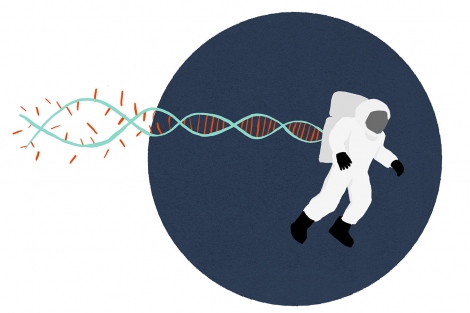 Schrepfer has too received an award to study furnishings of microgravity on the immune organisation as a model of aging, both in space and afterward returning to World. She has a kindred spirit in Millie Hughes-Fulford, PhD, adjunct professor of medicine and the showtime female scientist to work in space. Hughes-Fulford tended experiments aboard the Columbia space shuttle in 1991, and has been investigating the changes in gene expression in T-cells in infinite since about 2003.
"Over half of the Apollo astronauts had some sort of allowed trouble," she said. "So, we knew back then that the allowed organization wasn't working well in infinite."
Her current piece of work involves not merely looking at gene expression simply also at the role of microRNA (miRNA) – tiny molecules that can switch genes on or off. Her research revealed five of these miRNAs, each of which controlled genes that activate T-cells, weren't working properly.
"Earlier this, we could say that the genes weren't being turned on, simply we didn't know why," said Hughes-Fulford. "Now nosotros know the regulators of the genes."
These changes are the same ones seen in aging, leaving the elderly with less robust allowed systems. In space, though, the changes begin to occur after 30 minutes, while in a human being they may have 30 years. The research by Schrepfer and Hughes-Fulford could help people who travel in space, but besides is an opportunity to report changes that can exist challenging to follow throughout decades on Earth.
On the flip side, some research is confirming that other physiological functions may suffer space flight.
Fathi Karouia, PhD, a professional researcher in the UCSF School of Pharmacy and scientist at NASA Ames Inquiry Center, was involved in a report showing that the procedure of DNA repair – vital for an organism's long-term health – seems to be relatively unaffected by the spaceflight environs.
Karouia, who over the past three years has been part of many experiments looking at prison cell function in spaceflight, collaborated with Honglu Wu, PhD, of the NASA Johnson Space Center, to study fibroblast cells cultured onboard the ISS. Their investigation looked at how spaceflight, and microgravity in detail, affects the cells' response to DNA impairment.
Assessing the fibroblast cells when they returned, Karouia and his colleagues saw that the space-exposed cells repaired their DNA as effectively as like cells that remained on Earth.
"The story isn't clear, though," Karouia said. "DNA repair likewise depends on the cell type and growth conditions. This kind of work could help us understand Dna repair processes in all cells, how some cancer cells manage to repair themselves despite damaging radiation handling." Ultimately, Karouia said, studies like these will help address risks of radiation during extended space flight, including the mission to Mars.
While the research into space travel's issue on the human body continues, the researchers hold that earlier nosotros're able to ship humans to Mars, we need to know more nearly what'southward required for their living environment to keep them alive and healthy.
"The best way to impale a programme is to kill the people involved in information technology," said Hughes-Fulford. "If we're going to send spaceships to Mars, we need to sympathize how to sustain the people living inside them."
macdonaldmurst1966.blogspot.com
Source: https://www.ucsf.edu/news/2017/07/407806/traveling-mars-will-wreak-havoc-our-bodies-can-we-prevent-it
0 Response to "what would happen to a human on mars"
Postar um comentário